Wordy Wednesday

It’s Wordy Wednesday again and today’s word might give you the jitters.

Collywobbles can mean an upset stomach, or an intense sense of unease/ nervousness as in, “it gives me the collywobbles”.

In terms of British English usage, the word is thought to date back to the 19th century. Its origin is likely from the disease cholera.

I’d love to know if you have any favourite, intriguing or unusual words. Please post them in comments below.


It gave me the collywobbles going into the forest at night

Sum up Sunday

In January, I set myself the task of summing up my week every Sunday in 25 words or less. I’d love to hear your sum ups too. Here’s mine for this week.

The sun arrives and fades, returns

Winks, splutters, twists and turns

As I volunteer, write

Gaze in wonder at the Iron Giant.

Bennerley Viaduct, where Derbyshire and Nottinghamshire meet …

Wordy Wednesday

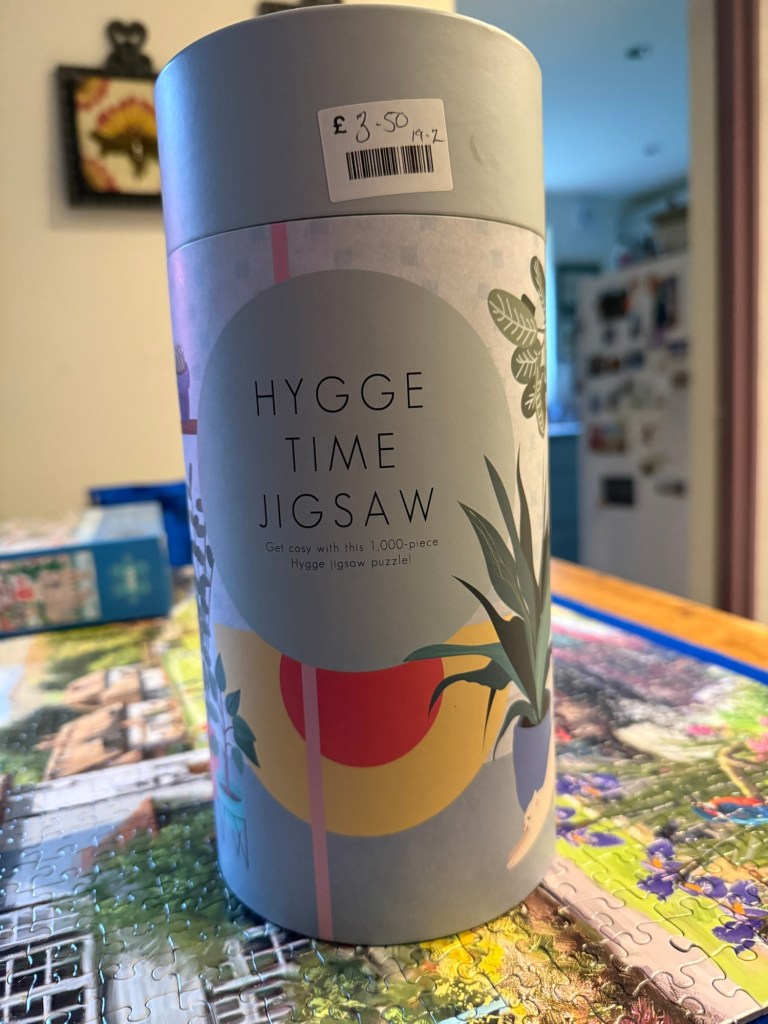
On a Tuesday morning, my partner volunteers in one of our local charity shops and often messages me to come and buy a few things. I never know what they might be but tea towels are a regular favourite – she’s a collector extraordinaire. This time, there were three items; a tea towel in a tin, a tin with teapots on it and a jigsaw.

When I got home, I studied the jigsaw and became fascinated by the word ‘Hygge’ on the front. As well as some information on the box, I headed to the visit Denmark website. Here it describes the fullness of its meaning. Hygge – pronounced hoo-gah – is about creating a warm atmosphere, enjoying the best of life with other people. They give some examples, such as the cosy glow of candlelight.

If you enjoy doing jigsaws, you probably get a sense of Hygge and the design on this one demonstrates that sense perfectly too. I think we all need more Hygge in our lives. Thank you Denmark.

We all need more Hygge

Wordy Wednesday

Do you have a word for Wordy Wednesday? I’d love to hear your favourite word or the one that best sums up how you feel today.

In the past few weeks I’ve had many medical appointments and I’m left feeling discombobulated. Confused, a bit off kilter and out of balance perfectly describes my experience.

Said to have first been recorded in the early 1800s in the form discomboberate, it might not be a great feeling but it’s still a grand word.

Wordy Wednesday

Having previously shared some words from the 16th and 18th century, today I bring a much more modern word. It is a blend of two words and became popular from around 2019.

Have you ever found yourself accidentally eating more snacks than you intended? Maybe you were anxious or simply distracted, only to find you’d eaten a large bag of crisps, or rather more biscuits than you meant to. If you have, then you’ve had a snaccident. What a brilliant word.

Look out for my next word on Wordy Wednesday and please do send me any of your favourite or discovered words.

Oops, another snaccident

Sum up Sunday

I’ve set myself the challenge of summing up my week in 25 words or less. If you’d like to have a go too, I’d be pleased to see your ‘sum ups’.

Here goes:

I volunteer

And I write

Rain, rain, more rain

And more

Hospital appointments x 2

See family

And relax –

With the cats.

Mubble-fubbles

I credit Susie Dent, lexicographer extraordinaire, for introducing me to this word via instagram. I’d been searching for something that would describe my current state of ennui, a sense of not being able to get on with anything or satisfactorily complete a task.

Mubble-fubbles perfectly sums up this feeling and is a 16th century expression for a fit of low spirits. I also read yesterday that January is the month for hibernation and rest. Perhaps, if I do just that, the mubble-fubbles will have passed by February.

In the still quiet of winter, rest and hibernate mind and body.

Weather Words

We’re known, in the UK, for our fondness for talking about the weather. This week has certainly given us cause to turn to our favourite subject time and again. We’ve had storms, rain, snow, ice and, occasionally, the sun has made an appearance.

My favourite weather word is dreich and one I frequently heard as a child from my Scottish aunts. I think it perfectly describes a miserable, grey and wet day. It’s most effective when said with a broad Scottish accent, the ‘ch’ sound similar to that used in ‘loch’.

Another very descriptive Scottish weather phrase is ‘blowing a hoolie’. It is thought that the hoolie comes from the Orkney word, hoolan, meaning a strong gale.

If it’s dreich or blowing a hoolie where you are today, why not hunker down with a good book – Dreich House maybe?

And Another Quirky Word

Have you ever shown off, strutted about vainly like a peacock? There’s a word to describe that and it’s derived from the Latin, pavo, meaning peacock.

Verb – pavonise or pavonize.

It’s not a word in common usage today though has been highlighted by Susie Dent, lexicographer, on social media.

Can you find a way to sneak it into conversation?

Another Quirky Word

Yesterday, I shared the word Quidnunc, meaning an inquisitive and bossy person. Today, I ask, are you hurkle-durkling?

This enchanting 18th century phrase is Scottish in origin and means lounging about in bed long after you should be up. Instead of sounding punitive like idle or lazy, hurkle-durkling sounds light and cheerful. I once saw the phrase, happiness is hurkle-durkling – perfect.

So, if you’re in the mood for some hurkle-durkling on a cold winter day, go ahead.

Get hurkle-durkling