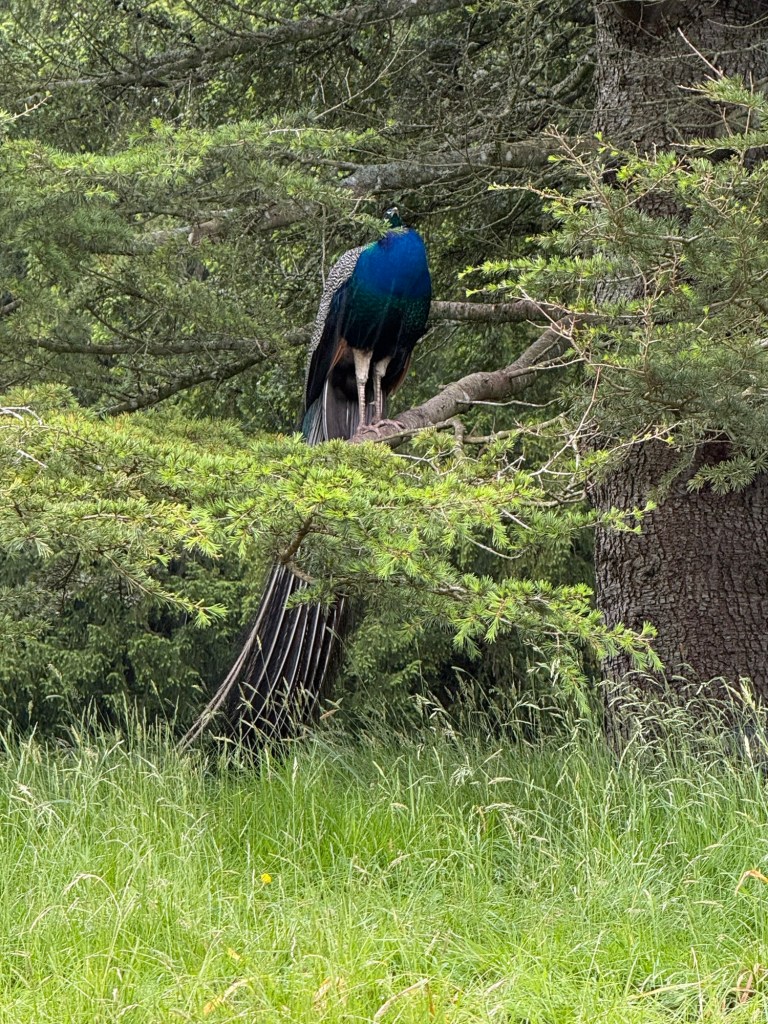
Yesterday, we went to visit Scone Palace and had just arrived, when so did the rain. A great cry went up from several of the peacocks who call the place home. As I turned, I saw this peacock hop into the tree. I quickly took a photo before we sought our own shelter in the café. Not the greatest photo but it made me smile.
I’m on holiday this week and my word of the week is holiday. There’s nothing like time away from home, exploring new things and being away from the usual commitments.
The origin of the word is from Old English hāligdæg, which is literally holy day. (Collins English Dictionary)
I am blessed to be in Scotland, a place I love deeply and have been visiting all my life. I’m in Perthshire and I remember my dad always extolling the virtues of the clean air here.
It’s Wordy Wednesday again and, today, I bring you a word whose origin lies in Scotland. It’s been used in proverbs and poems, including by the famous Scottish bard, Robert Burns. It’s also, I believe, one of those words that sounds like its meaning somehow.
Crabbit – out of humour or in a bad temper. It’s a word, given my Scottish heritage, that I often heard during our many visits to Scotland when I was a child.
We’re known, in the UK, for our fondness for talking about the weather. This week has certainly given us cause to turn to our favourite subject time and again. We’ve had storms, rain, snow, ice and, occasionally, the sun has made an appearance.
My favourite weather word is dreich and one I frequently heard as a child from my Scottish aunts. I think it perfectly describes a miserable, grey and wet day. It’s most effective when said with a broad Scottish accent, the ‘ch’ sound similar to that used in ‘loch’.
Another very descriptive Scottish weather phrase is ‘blowing a hoolie’. It is thought that the hoolie comes from the Orkney word, hoolan, meaning a strong gale.
If it’s dreich or blowing a hoolie where you are today, why not hunker down with a good book – Dreich House maybe?
Architect, John Smith designed Footdee’s cottages in 1809 to rehouse fishermen
It is known, by locals, as Fittie
Though many believed the name Footdee referred to ‘foot of the Dee’ it is actually a corruption of a dedication to St Fothan
So armed with these facts, why visit this tiny place? It has the Silver Darling restaurant, a nod to the old Scottish name for herring. There’s an obelisk, Scarty’s Monument; you could be forgiven for thinking it’s a memorial but it’s really the ventilation shaft of a disused sewage point. The war memorial commemorates Footdee folk who died in first and second world wars. The roundhouse was the former harbour master’s station and the marine operations building is shapely in gleaming glass.
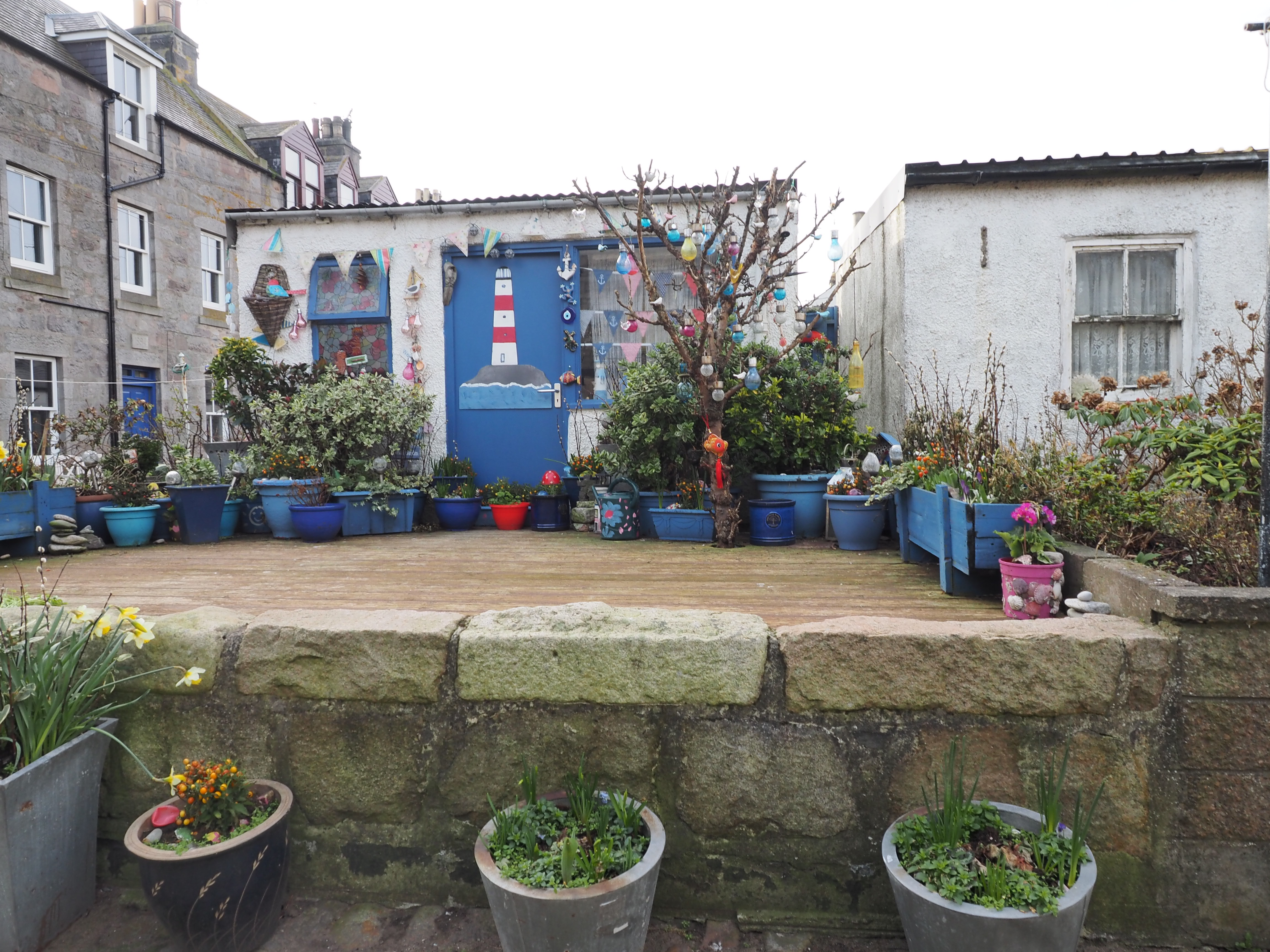
All these pale to nothing when you meet the enchanting network of cobbled walkways hosting quaint cottages and quirky sheds. It’s said upcycling gave birth here long before television shows claimed its popularity. Rusting mangles and fishermen’s boots host flowers and trailing plants; lifebelts become the means to name a shed. It’s a time stands still, steeped in history (almost) hidden gem.
How had I missed it in the 60 years I’d been visiting Aberdeen? I spoke to myaunt, the Aberdeen oracle who’s lived in the city since she was five. Her face lit up. “Fittie? I love it. We used to go there often, walking round each path admiring the little cottages all dressed up.” If you’ve been, you’ll know what she means. If you haven’t, don’t overlook thisfascinating, model village style piece of social history. Can you resist?