Wordy Wednesday

I was on the bus recently (great place to pick up story ideas) and the two people behind me were chatting about a man they both knew. They were speculating as to whether he was ever going to find a partner.

“I wouldn’t ask, if I were you,” one said. “He takes umbrage at personal questions, that one.”

I smiled as they got off the bus, thinking there’s my next Wordy Wednesday.

To take umbrage means to be upset or offended by something someone says or does. I hadn’t thought about the meaning as it relates to providing shade, coming from the Old French umbrage. This in turn is from the Latin umbrâticus, which relates to shade – umbra shade. (Collins Dictionary)

Amazing what comes from a trip on the bus.

Bonus Wordy Wednesday

Two things coalesced this month in preparing my piece for the writing group I attend. Firstly, the prompt, which was to use pair idioms. Second, was a comment from a reader, on a previous Wordy Wednesday, using the word kenning, where two words are used to describe something or someone. I remembered how much I enjoyed learning about kenning poems at a writing group and decided to combine a kenning and pair idioms.

Pause for a Kenning

Aloof charmer, people calmer

Tail flicker, nose tickler.


Bright and early, out and about 

Here and there, back and forth.


Bed maker, sleep taker

Fence climber, two-timer.


Up and down, leaps and bounds 

Heads and tails meet and greet.


Tux wearer, stripe bearer

Sofa scratcher, mouse catcher.


Sooner or later, peace and quiet 

Fair and square, they’re always there.

Wordy Wednesday

Recently, a friend introduced me to the phrase, ‘having a benny‘. She was describing a situation where she’d avoided ‘having a benny’ because she’d had lots of friends round at the time. I’d heard the term before but not for some time and I immediately thought it’d be a good one for Wordy Wednesday.

To have a benny is to throw a tantrum or get angry about something and is used widely in The Midlands. There are many other phrases used to refer to the same thing. What do you say where you live?

What are the things that make you want to ‘have a benny’?

Wordy Wednesday

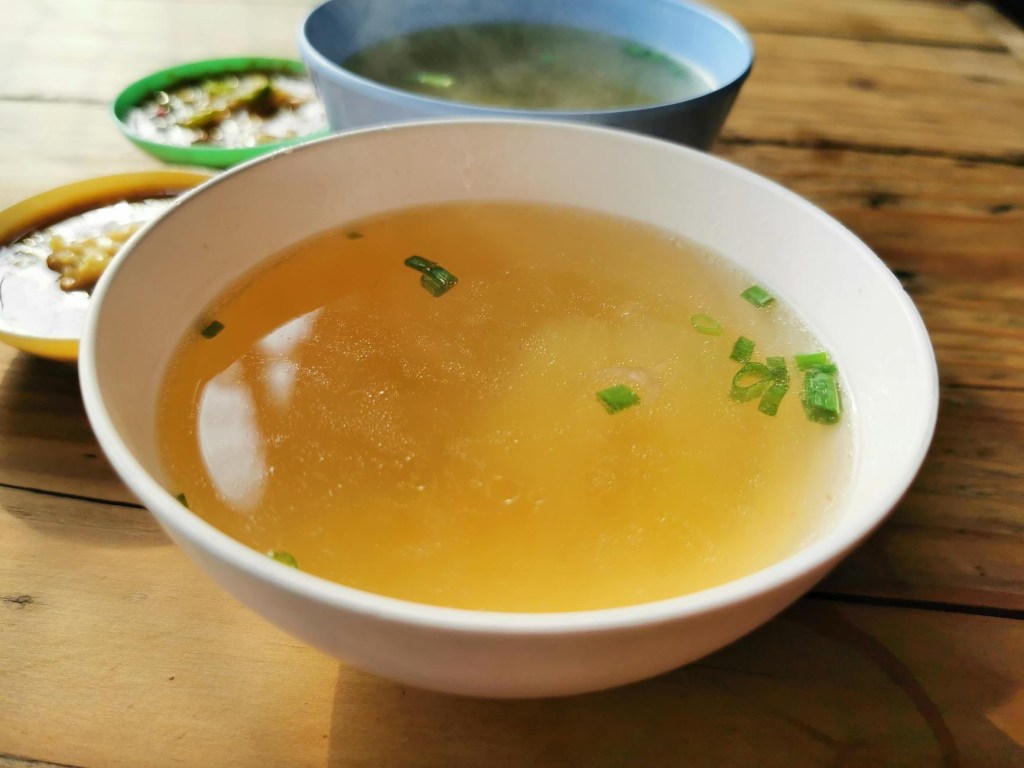
For today’s word, I decided to open a page of The New Oxford Dictionary of English and look for a word I’d never heard of before. On my quick scan of the pages from Madeira to magic lantern, I found the word ‘madrilene’. Spell check attempted to push me toward mandrill and mad riding; I held my ground.

Madrilene is, I discovered, a clear soup that is usually served cold. It comes from the French ‘consommé à la madrilene’ – the literal translation being ‘soup in the Madrid style’.

As the saying goes, you learn something new every day.

Have you any words to share? I’d love to hear from you.

I’ve (hopefully temporarily) lost image playground for my usual images – apologies and grr!

Clear soup

Wordy Wednesday

I’m on holiday this week and my word of the week is holiday. There’s nothing like time away from home, exploring new things and being away from the usual commitments.

The origin of the word is from Old English hāligdæg, which is literally holy day. (Collins English Dictionary)

I am blessed to be in Scotland, a place I love deeply and have been visiting all my life. I’m in Perthshire and I remember my dad always extolling the virtues of the clean air here.

Where’s your favourite place to holiday?

Wordy Wednesday

It’s been a very hot few days here so, for today’s word, I’m turning to The Doric. This is the dialect spoken in the North East of Scotland. My dad was originally from Aberdeen so many Doric words are familiar to me.

I’ve heard the phrases, ‘ower hot’ meaning too hot and ‘bilein hot, meaning boiling hot. Glancing through Doric for Beginners by Karen Barrett-Ayres, I found a word I’d never heard of to describe the heat. ‘Plottin’ means unusually hot, which it’s certainly been this week. On the news last night, one of the presenters reminded us it’s still spring, not summer.

What words do you use to describe hot weather? I look forward to hearing from you.

Wordy Wednesday

My word this Wednesday is blurb. I’ve always thought it seemed a very informal word to describe the short description that appears on the back of a book, or to describe a film.

An early 20th century word, it was coined by Gelett Burgess, an American humorist. He is said to have invented the word for the promotional cover of his own book.

It is, of course, a term now widely used and recognised by publishers and authors. That small word, though, holds great importance. The blurb on the back of a book is, for many of us, the difference between buying or not buying. I wonder if that’s true for you?

To buy, or not to buy …

Wordy Wednesday

With the many dialects around Scotland and England, it’s no surprise that there’s an unique word in the different parts of the countries to describe the passage between buildings. I hadn’t realised, before delving deeper into this, quite how many there are.

In Scotland and the North East, we have vennel, wynd, chare and close. I knew of wynd from my travels in Scotland but had never come across chare, which seems to be specific to Newcastle and the surrounding area.

In Northern England we have the ginnel, snicket, entry and tenfoot – a new one for me. Tenfoot is the term from Hull and relates to the specific width of an alley. Brilliant.

Heading to The Midlands we have jitty, twitchel and shut. In Shropshire the ‘ends’ were shut at night, hence shut.

In Southern England twitten, ope and alley or alleyway are used. Ope comes from Cornwall and is short for opening.

Living most of my adult life in The Midlands, I tend to use jitty. What’s your word for an alleyway? Maybe you have one not on my list; I’d love to know. And if anyone’s from Northern Ireland, Wales or further afield I’d be interested to know the word you use to describe an alleyway.

Just strolling down the jitty

Wordy Wednesday

Last weekend we went over to Birmingham to drop off my daughter’s birthday presents and go out for a pre-birthday lunch. She wanted to try a Colombian café in Bearwood that she’d heard about called Colombian Picada Mix. As well as wanting to try the café, my daughter was keen to practise her Spanish, which she’s been learning for a while.

As we perused the menu, all in Spanish, we got to discussing burritos – even though they were not on the menu as they’re more associated with Mexico. What piqued my interest was discovering that the direct translation of burritos is little donkey. Curious; how did a little donkey become a food wrap?

My son-in-law, speculated that it might refer to the bags carried by donkeys on their backs. Turns out he’s probably right. Though there are a number of possible explanations for the word burrito, one is that it refers to the resemblance of a burrito wrap to the rolled up packs carried by donkeys.

What a wonderful time we had immersing ourselves in language and meanings. This is why I love words; there’s always something new to discover.

We also had a fantastic meal with exceptional hospitality at https://columbiapicadamix.co.uk

Wordy Wednesday

We are all familiar with the use of a ‘smith’ meaning a craftsperson, for example a blacksmith or silversmith. My word for today is wordsmith, simply meaning ‘a skilled user of words’ (New Oxford English Dictionary of English).

It is a very timely word, my debut children’s book, The Clocker, having been published yesterday. I like the idea of being a wordsmith. It is a craft shared by many around the world, in different languages, styles and genres. Where would we be without wordsmiths?

A special shoutout to all my fellow bloggers and to the Let’s Write group at The Writers Bureau.

https://www.writersbureaucourse.com/courses/let-us-write