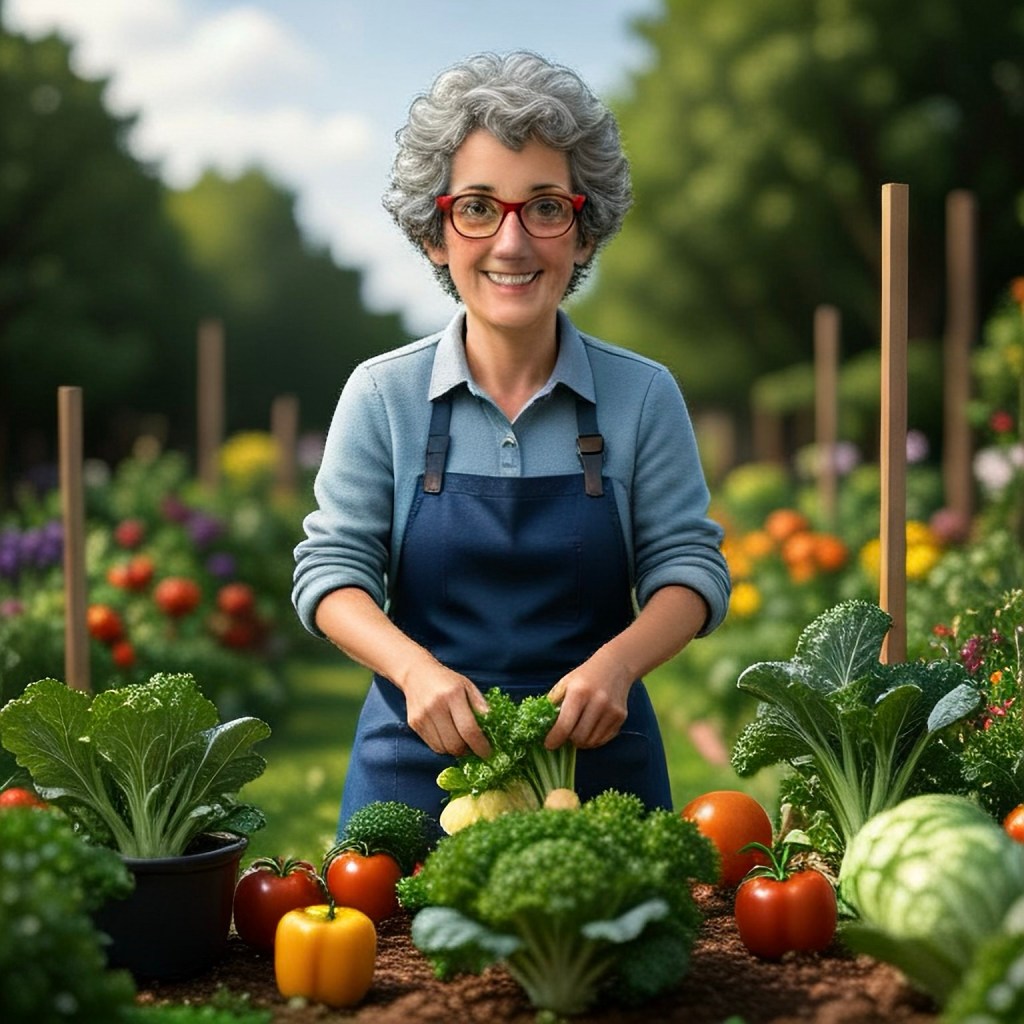
This week I am really pleased at how wonderful the produce from my small garden is. Delicious new potatoes, enough mini cucumbers for us and our neighbours, mint, rocket … It’s very satisfying to eat food you’ve grown yourself. Fresh blueberries every morning with breakfast is a real treat.
What are you pleased with this week?
Nev, the main character in my children’s book, The Clocker, picks veggie leaves from his garden to give to his hens. My Books
Whether you love or hate sport, you’d be hard pressed not to have noticed that both Wimbledon and the football World Cup are currently playing. With that in mind, I have two words this week.
In tennis, the word love relates not to romantic love but a score of zero – she was 15-love down. According to the Oxford English Dictionary, the origin comes from play for love, that is for the love of the game. Folk etymology also links the word with the French, l’oeuf, referring to a similarity in shape to an egg and a zero.
Moving on to football, I do enjoy seeing all the strips from different countries playing in The World Cup. This made me wonder why it’s called a strip, meaning the identifying kit worn by members of a sports team. The Oxford English Dictionary says this possibly comes from the idea of the clothes that players strip down to.
Ready to watch the football
Did you know that, in my children’s book, The Clocker, the main character makes up his own words? My Books
It’s Friday again and time to reflect on achievements, or things I’m pleased about this week. I’d love to hear your Flaunt it Friday too.
I’ll admit it, I’m not someone who finds it easy to ask something of others; offering comes much easier. This makes the task of promoting my children’s book, The Clocker, a challenge. It’s not something you do just once either; it’s an ongoing process. I find it easy to decide it’s not worth asking when, the reality is, I don’t find asking comes naturally. As the saying goes, if you don’t ask ….
With this in mind, I’m pleased that I’ve reached out to several people this week, asking them to review my book. Even if I’m trudging along, I’m putting one foot in front of the other and I keep going.
I was on the bus recently (great place to pick up story ideas) and the two people behind me were chatting about a man they both knew. They were speculating as to whether he was ever going to find a partner.
“I wouldn’t ask, if I were you,” one said. “He takes umbrage at personal questions, that one.”
I smiled as they got off the bus, thinking there’s my next Wordy Wednesday.
To take umbrage means to be upset or offended by something someone says or does. I hadn’t thought about the meaning as it relates to providing shade, coming from the Old French umbrage. This in turn is from the Latin umbrâticus, which relates to shade – umbra shade. (Collins Dictionary)